
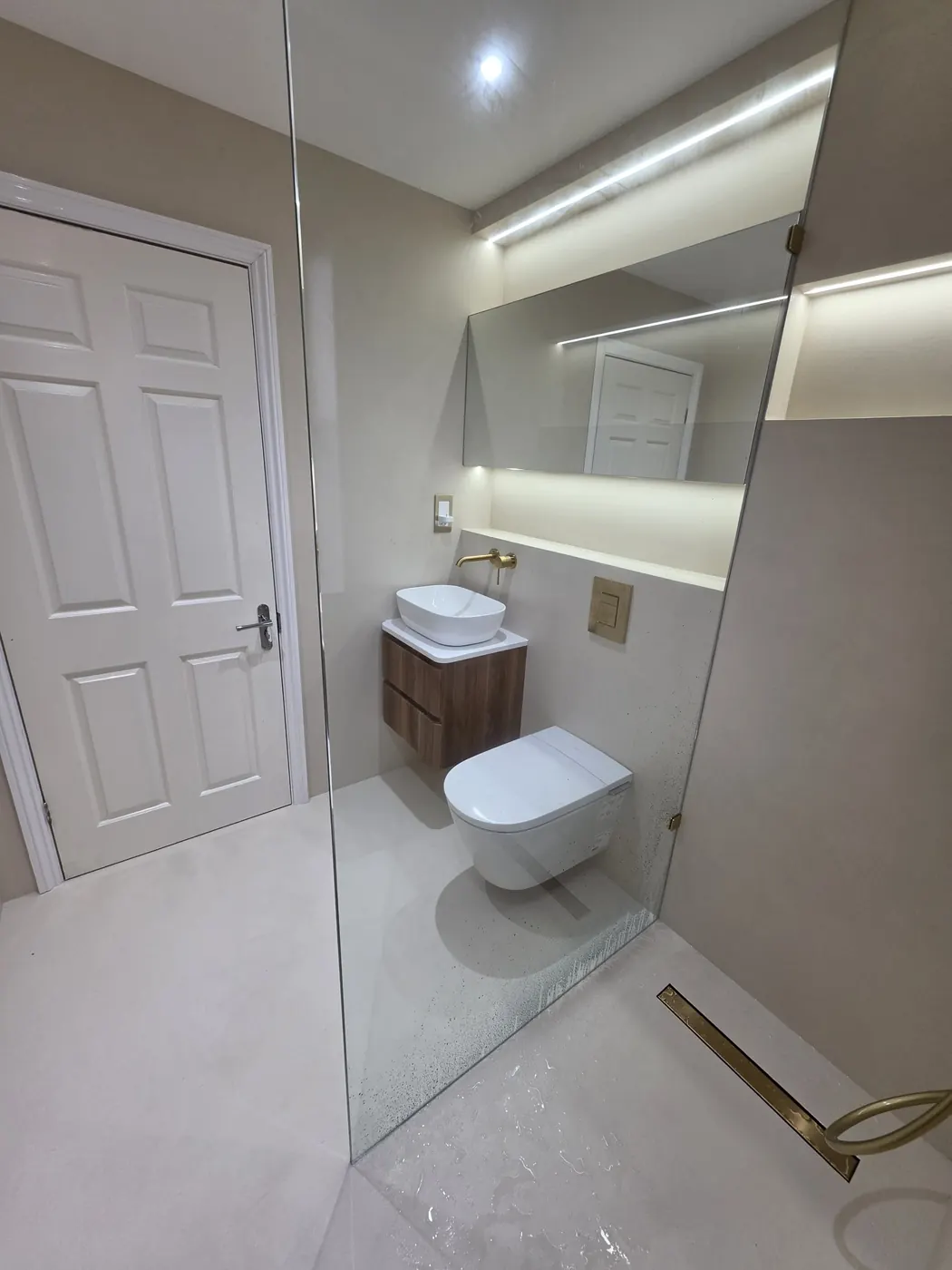
Microcement creates a contemporary, continuous-looking finish that can suit walls, floors and specialist bathroom details. The result depends as much on correct preparation and the specified product system as on the final colour.
Why choose microcement?
Microcement can create a visually quiet bathroom with fewer visible grout joints and a broad range of textures and shades. The finished appearance can work particularly well with minimal fittings, walk-in showers and carefully designed lighting.
Microcement is not a shortcut around waterproofing
Wetroom and shower-area performance must be considered as a complete system: the underlying substrate, movement, junctions, any waterproofing membrane, the decorative layers and the final protective sealer. The chosen manufacturer’s application instructions and compatibility requirements should govern the specification. A decorative microcement layer alone must not be assumed to provide a compliant wet-area waterproofing system.
Preparation matters
The substrate must be stable and suitably prepared. Corners, shower niches, drains, transitions and existing finishes need particular attention. Microcement is not the same as hiding a structurally unsound wall or floor under a thin finish.
Cleaning and maintenance
Appropriate cleaners, avoidance of abrasive treatment and any manufacturer-recommended sealer maintenance are part of ongoing care. Follow the instructions for the exact system installed rather than generic advice.
Is it more expensive than tiles?
There is no reliable universal price comparison: surface condition, total area, detailing, wet-area requirements and the product system all change the work. Master Tiling can price a specified microcement option alongside porcelain tiling for the same bathroom.